Balasen Close Die Forging
Balasen Close Die Forging
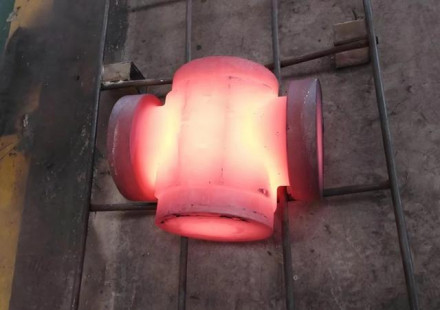
Closed aluminum die forging, is a metal-forming process where heated metal is shaped by compressive forces between two dies (molds) containing precut profiles. The dies fully enclose the workpiece, forcing the metal to flow into the cavities and precisely conform to the desired geometry. This method is widely used to produce high-strength, complex components with tight tolerances.
Applications by Steel Grade
Advantages of Semi Closed Die Forging
- High Precision & Consistency:
The enclosed dies in the metal forging process ensure dimensional accuracy and repeatability, minimizing post-processing.
- Superior Mechanical Properties:
The controlled metal flow aligns grain structures, enhancing strength, fatigue resistance, and impact toughness.
- Material Efficiency:
Minimal flash (excess material) reduces waste compared to open-die forging, making it a preferred choice for a reliable cold forging supplier.
- Complex Geometries:
Capable of producing intricate shapes with fine details, such as ribs, bosses, and contours.
- Scalability:
Economical for high-volume production due to rapid cycle times and long die life, ideal for partnering with a custom metal casting company that also excels in forging solutions.
Suitable Materials of Close Die Forging
- Steel Alloys:
Carbon steel, alloy steel, and stainless steel (e.g., automotive parts, tools).
- Lightweight Metals:
Aluminum and titanium alloys (e.g., aerospace components).
- High-Temperature
Alloys: Nickel-based superalloys (e.g., jet engine parts).
- Copper Alloys:
Used in electrical and plumbing applications.
Note: Materials must exhibit good ductility at forging temperatures.
Applications of Close Die Forging
Automotive: Engine components (crankshafts, connecting rods), transmission gears, and suspension parts.
Aerospace: Turbine blades, landing gear, and structural fittings.
Industrial Machinery: Heavy-duty gears, valves, hydraulic components, and agricultural equipment.
Energy Sector: Pipeline fittings, drill bits, and nuclear reactor parts.
Defense: Armor components, artillery shells, and missile systems.
Technical Parameters of Close Die Forging
- Temperature Range:
Preheating: Typically 950–1250°C for carbon and low-alloy steels, depending on material composition and forging requirements.
Forging Pressure: Ranges from 50–150 MPa, influenced by part complexity and material flow stress.
Cooling Rate: Controlled to prevent cracking; air cooling for most steels, oil/water quenching for high-hardness alloys.
- Die Design Parameters:
Parting Line: Critical for alignment; minimizes flash formation.
Draft Angles: Typically, 3°–5° to facilitate part ejection.
Flash Thickness: 1–3 mm, optimized to balance material waste and die filling.
- Dimensional Tolerances:
General Tolerance: ±0.5–1.5 mm for small-to-medium components9.
Surface Finish: Ra 3.2–12.5 μm, depending on die finish and post-forging treatments.
Common Steel Grades for Types of Closed Die Forging
Carbon and Low-Alloy Steels
Carbon Structural Steels(Carbon Steel Casting):
Q235 (China GB): Equivalent to ASTM A36 (USA), JIS SS400 (Japan), DIN S235JR (Germany)
45 Steel (China GB): Equivalent to ASTM 1045 (USA), JIS S45C (Japan), DIN C45 (Germany)
Alloy Structural Steels (Alloy Steel Casting):
40Cr (China GB): Equivalent to ASTM 5140 (USA), JIS SCr440 (Japan), DIN 41Cr4 (Germany)
4140 (ASTM): Widely used for high-strength components; equivalent to JIS SCM440 (Japan), DIN 42CrMo4 (Germany)
Tool Steels
Cold-Work Tool Steels:
Cr12Mo1V1 (China GB): Equivalent to DIN 1.2379 (Germany), used for high-wear dies
D2 (ASTM): Equivalent to JIS SKD11 (Japan), DIN X155CrVMo12-1 (Germany)
Hot-Work Tool Steels:
H13 (ASTM): Equivalent to JIS SKD61 (Japan), DIN 1.2344 (Germany), suitable for high-temperature forging dies
Stainless Steels
Austenitic Stainless Steels:
1Cr18Ni9 (China GB): Equivalent to ASTM 302 (USA), JIS SUS302 (Japan), DIN X12CrNi18-8 (Germany)
Martensitic Stainless Steels:
420 (ASTM): Equivalent to JIS SUS420J1 (Japan), DIN X20Cr13 (Germany)
High-Temperature Alloys
Inconel 718 (ASTM): Used for aerospace components; equivalent to DIN 2.4668 (Germany)
Reference standards of closed die forging and open die forging
- Material Standards:
ASTM A29/A29M: Specifies general requirements for carbon/alloy steel forgings
ISO 4957: Defines tool steel grades for forging dies
DIN EN 10083-3: Covers alloy steels for quenching and tempering
- Process Standards:
ASTM E8/E8M: Standard test methods for tension testing of metallic materials
ISO 9001: Quality management for forging processes
If you want to know more about closed die forging process pdf and closed die forging process video, please visit our website.
At Balasen, we specialize in advanced metal process casting, delivering high-quality solutions. Our sand casting techniques combine precision and innovation to produce durable metal components that meet the rigorous demands of various industries. Utilizing state-of-the-art technology and skilled craftsmanship, we ensure optimal material properties and dimensional accuracy.